< Back

Fossil Pokemon


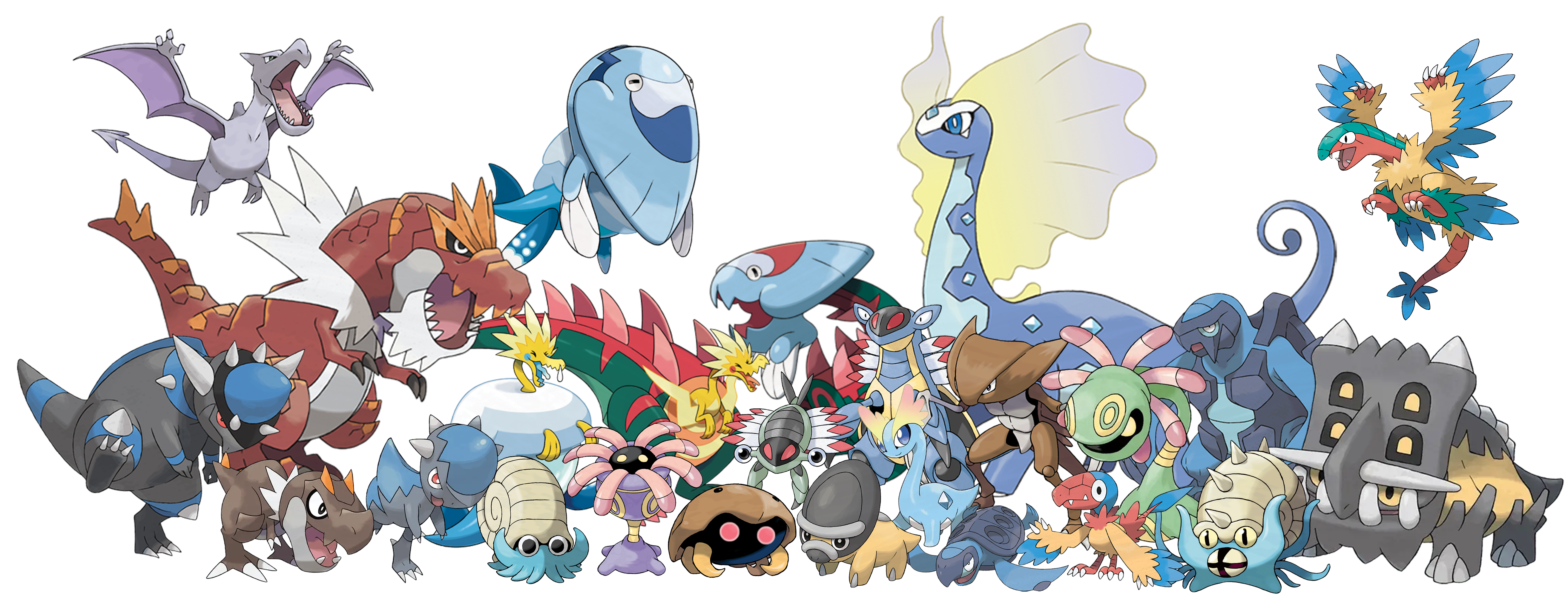
Fossil Pokemon are Pokemon that are based upon various prehistoric lifeforms. These Pokemon are restored from fossils that the player finds along their journey. Originally three fossils existed in the first game- the Helix and Dome fossils were introduced in a pair, allowing the player to pick one from the two, and the Old Amber was given later in the game. In subsequent games with new fossil Pokemon (apart from Sword and Shield), these fossils were introduced in pairs like with the Helix and Dome fossils. The Johto, Alola, Hisui, and Paldea regions did not introduce any new fossil Pokemon in their respective games. The Galar region did introduce new fossils, but they did it in a manner different to previous generations. Instead of having two fossils in a pair that the player chose one from, the Sword and Shield games gave the player four different fossils and allowed them to combine them in pairs to make two different creatures.


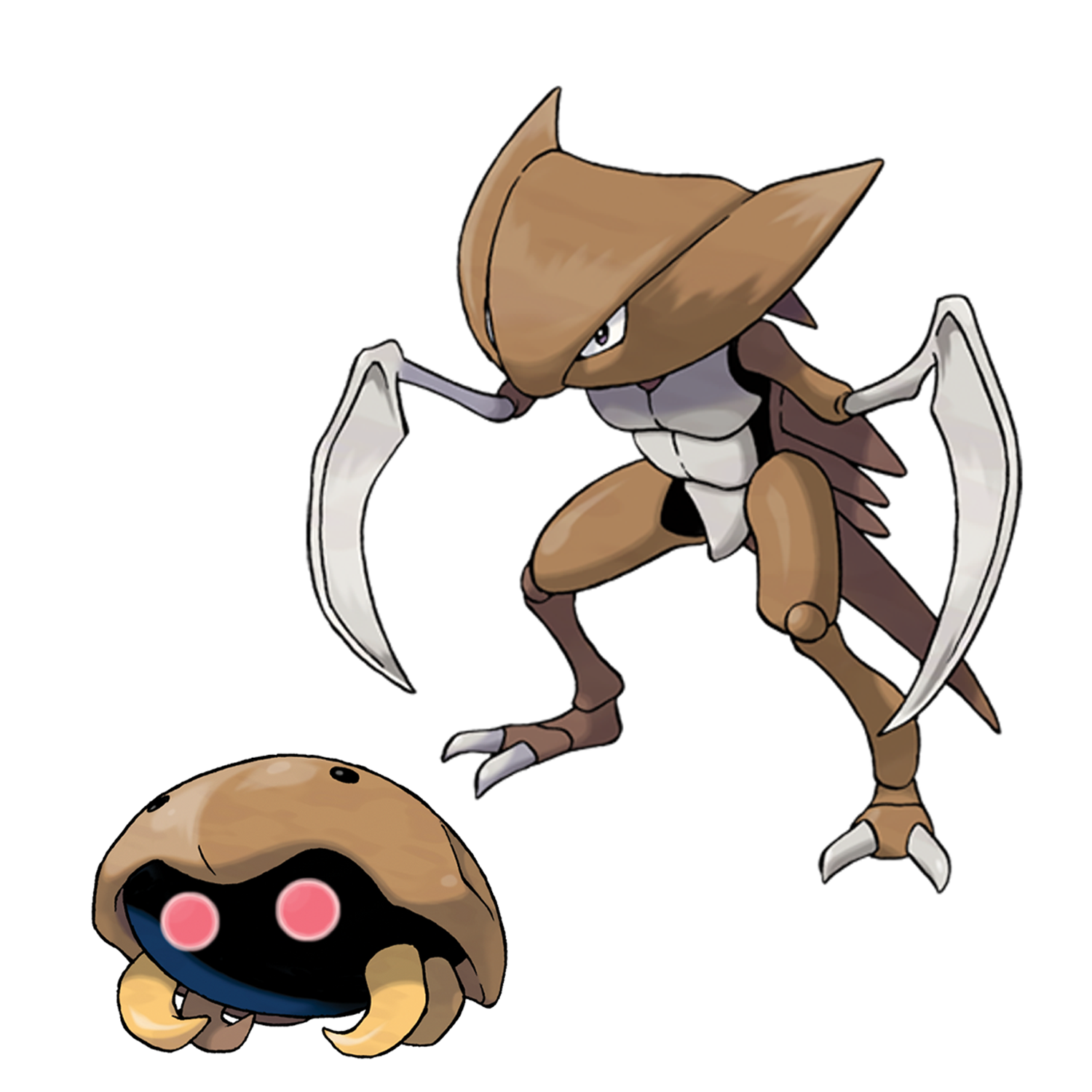
KABUTO AND KABUTOPS

Kabuto is the Pokemon that the player receives upon restoring the Dome Fossil, and Kabutops is what Kabuto evolves into upon reaching level 40. These Pokemon were introduced in the Kanto region, and both share the Rock-Water typing. Though many people think the line is based upon trilobites, official art shows that they are actually based upon horseshoe crabs. Like real life horseshoe crabs, multiple Pokedex entries state that some small populations of Kabuto are still around in the present day and have been found in the wild. No Pokedex entries indicate the survival of Kabutops into the modern day outside of trainers evolving them, however. Kabuto and Kabutops favor warm, shallow seas to live in, and it is thought Kabutops adapted more toward living on land to follow its prey. Fossils found of these Pokemon have been dated back to 300 million years ago, placing their initial evolution toward the end of the Carboniferous period. Kabuto has barely changed in physiology since then, making it a living fossil. It is unknown how well Kabutops adapted going into the Permian; the evolution could have gone dormant after the collapse of the Carboniferous forests, or it could have stuck around and found success in coastal regions of the Permian prior to the Great Dying. Ultra Sun's Pokedex entry suggests the former, but Shield's entry contradicts Ultra Sun's, claiming the reason it disappeared as being unknown.
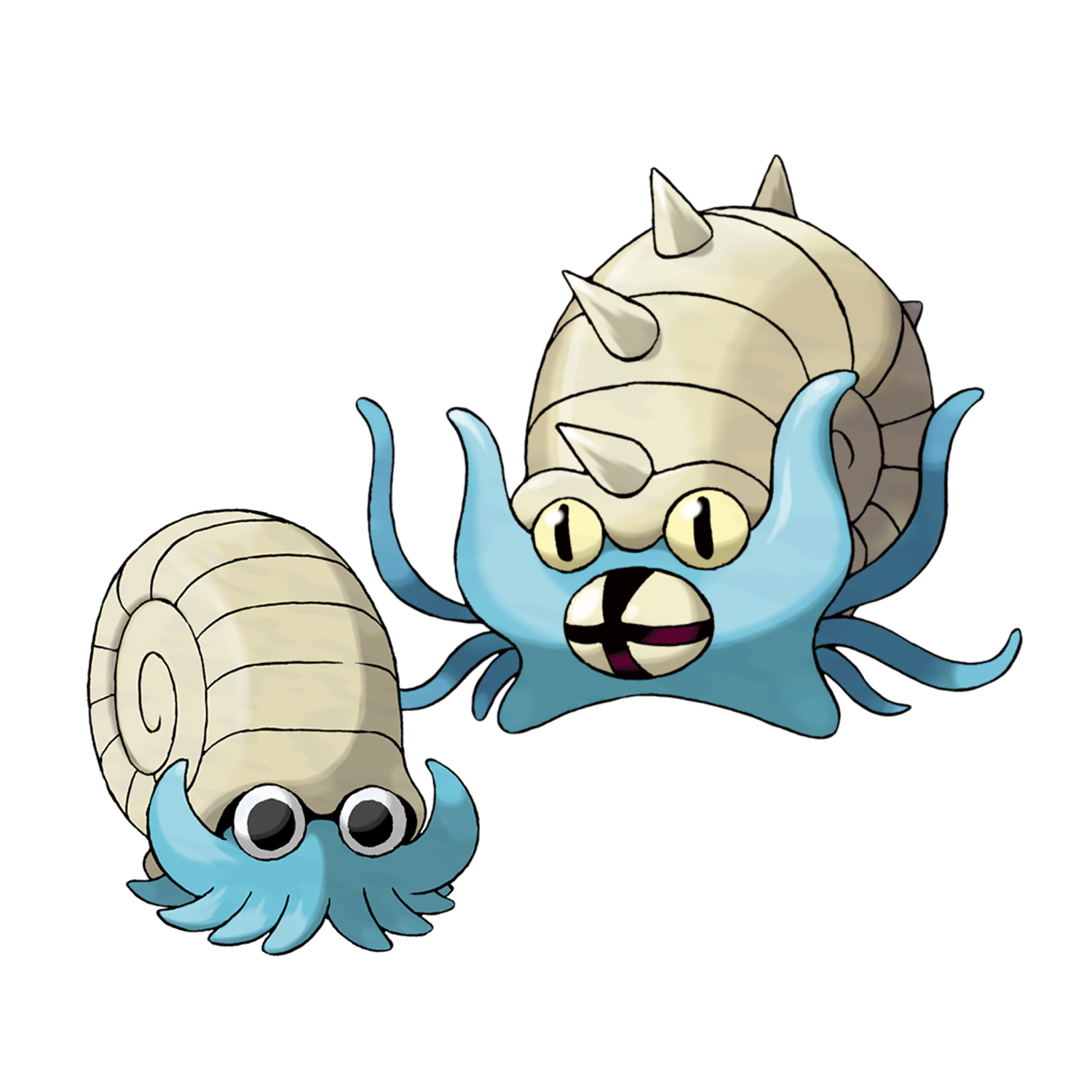
OMANYTE AND OMASTAR

Omanyte is the Pokemon that the player receives upon restoring the Helix Fossil, and Omastar is what Omanyte evolves into upon reaching level 40. These Pokemon were introduced in the Kanto region, and both share the Rock-Water typing. This line is based upon ancient shelled cephalopods, primarily ammonites. This line is also confirmed to be completely extinct prior to restoration, unlike its counterpart Kabuto. No Pokedex entries give a specific fossil age for a time period when these Pokemon were originally around, but multiple entries do mention that this line went extinct because of Omastar's shell eventually becoming too heavy and cumbersome for it to continue to pursue ever-faster prey. Given the line's primary ammonite inspiration, they likely didn't make it out of the Mesozoic, as ammonites were killed off in the K-T extinction event that also took out the non-avian dinosaurs.

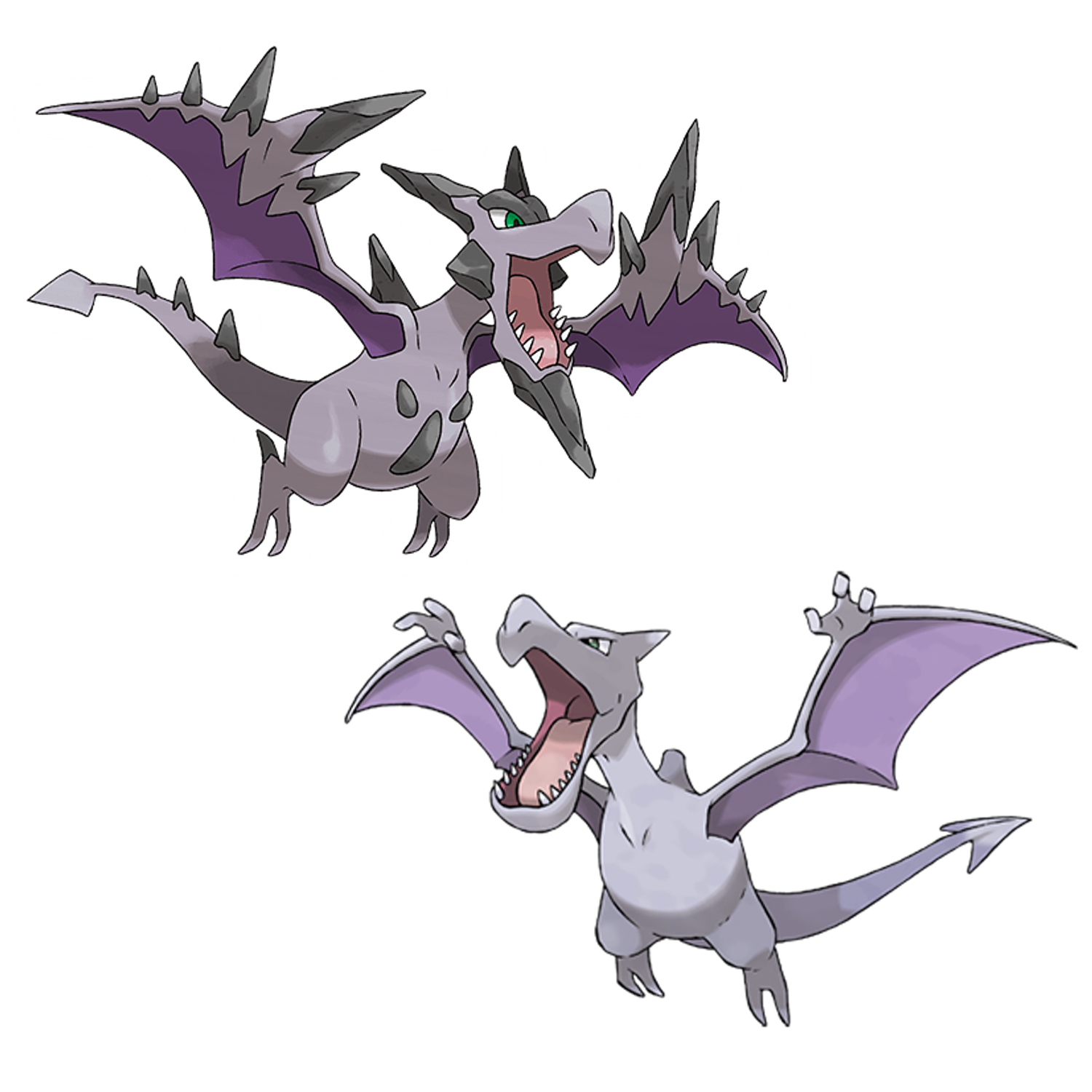
AERODACTYL

Aerodactyl is the Pokemon that the player receives upon restoring the Old Amber. Aerodactyl was introduced in the Kanto region, and it has the Rock-Flying type. It is based upon various pterosaurs. It does not have any pre-evolutions or evolutions, but it was given a mega evolution in Generation 6. Though no Pokedex entries mention a specific year age for fossils, they do mention that Aerodactyl lived during the "age of dinosaurs", which narrows the time range down to the Mesozoic Era. Looking at its real-world inspiration, we can reasonably narrow this range down further to the Jurassic or Cretaceous periods based upon Aerodactyl's size. Though pterosaurs existed as early as the late Triassic, these early pterosaurs were quite small, and larger ones didn't come around until later. Because Aerodactyl is only mentioned to live during the "age of dinosaurs", it likely went extinct in the K-T extinction event. Multiple Pokedex entries mention that regular Aerodactyl is not what prehistoric Aerodactyl actually looked like; rather, Mega Aerodactyl is its true physiology.

LILEEP AND CRADILY

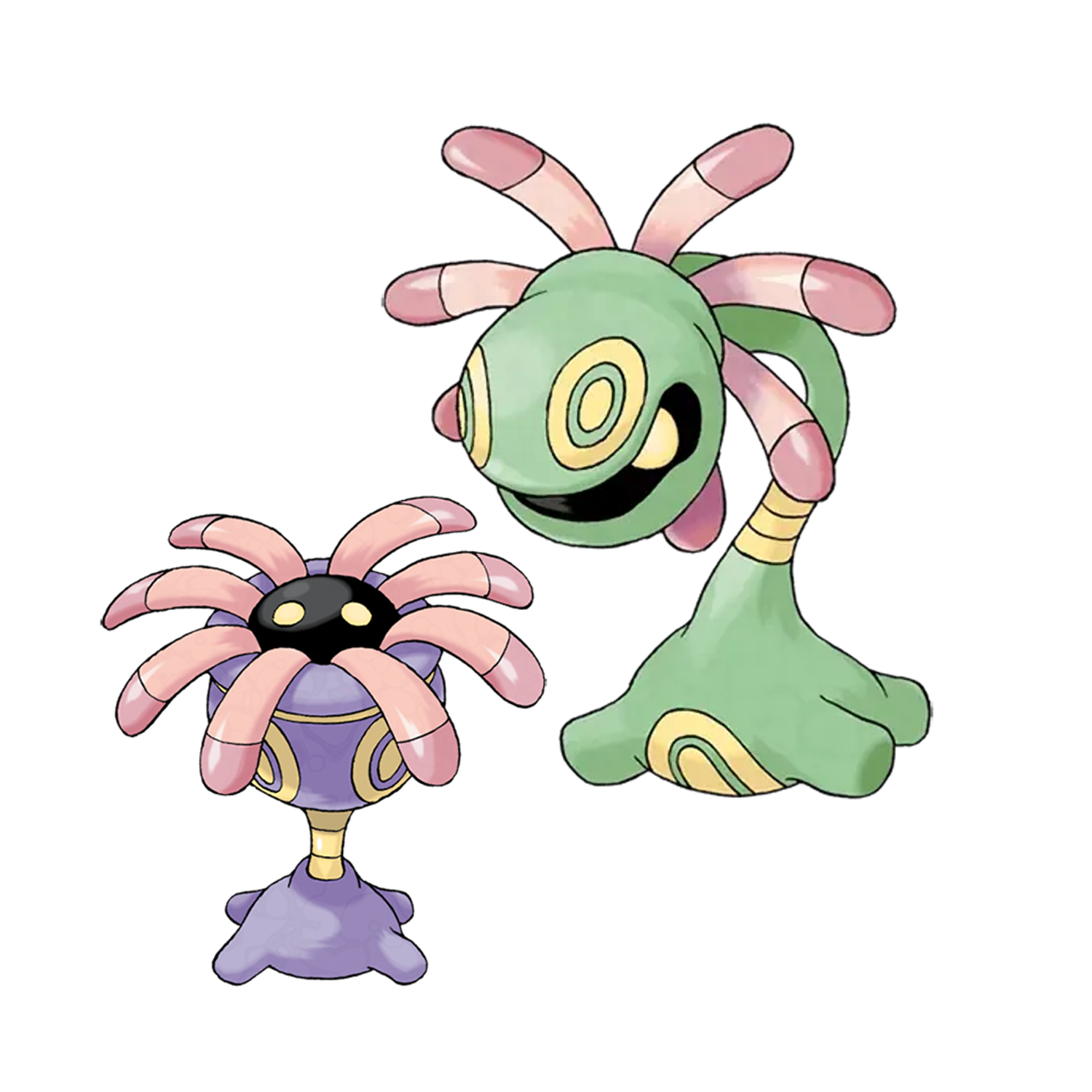
Lileep is the Pokemon that the player receives upon restoring the Root Fossil, and Cradily is what Lileep evolves into upon reaching level 40. These Pokemon were introduced in the Hoenn region, and both share the Rock-Grass typing. This line is based upon ancient crinoids, particularly the sea lily variety. Multiple Pokedex entries mention that these Pokemon went extinct roughly 100 million years ago, making the last time these Pokemon lived naturally in the wild sometime around halfway through the Cretaceous period. We aren't given an age for the oldest fossils of them in-game, but looking toward their real-world inspiration, it's safe to assume they'd been around since the Ordovician or potentially even the Cambrian period. Unlike their real-world counterparts, which are suspension feeders, Lileep and Cradily are more actively predatory. Lileep snatches up any prey that swims too close with its tentacles, and Cradily actively crawls around the seafloor and digs up prey from the sand.

ANORITH AND ARMALDO

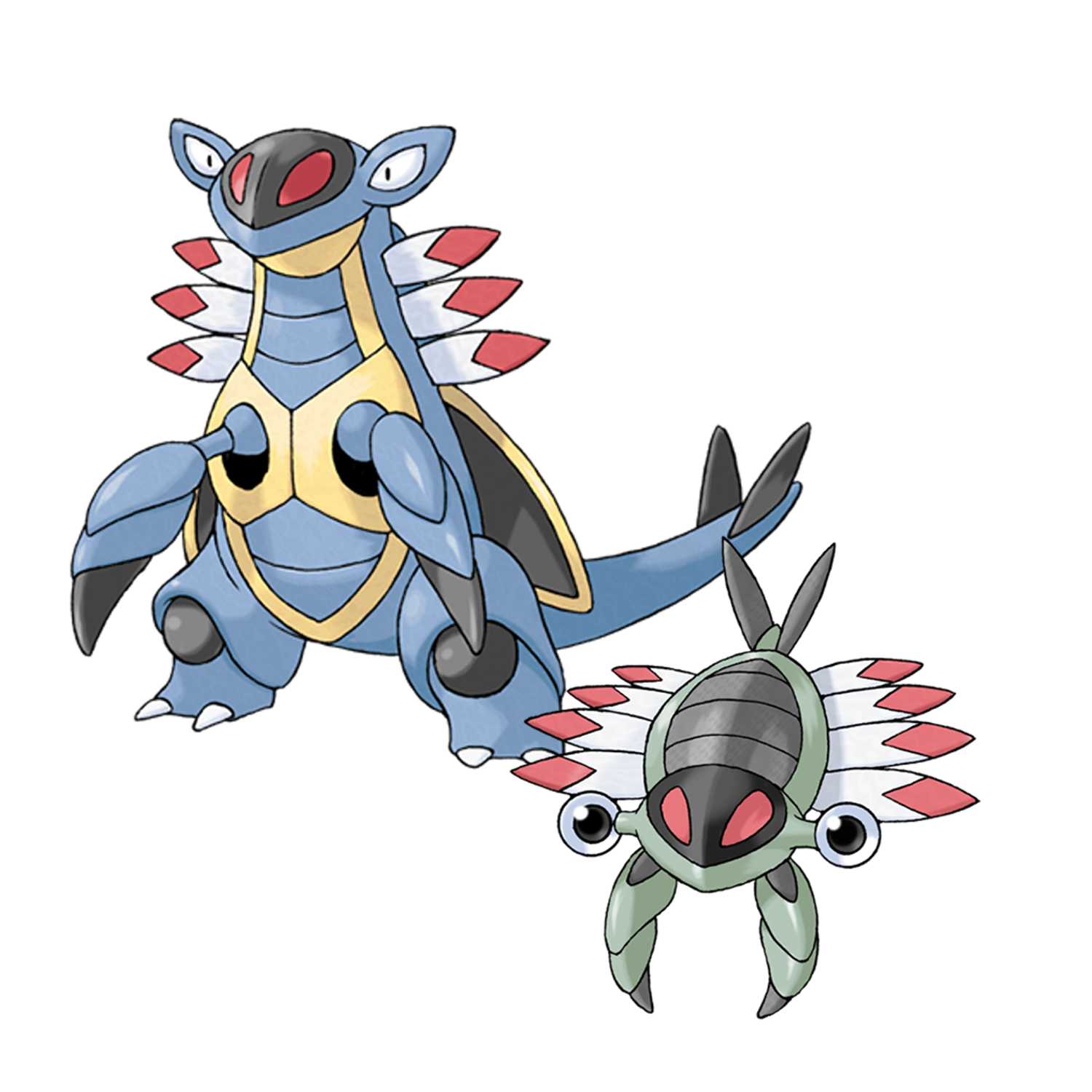
Anorith is the Pokemon that the player receives upon restoring the Claw Fossil, and Armaldo is what Anorith evolves into upon reaching level 40. These Pokemon were introduced in the Hoenn region, and both share the Rock-Bug typing. This line is based upon the radiodont Anomalocaris. Not much is known based off of the Pokedex entries about when exactly this pokemon lived; most mention them living in the "primordial sea", which could range from the Precambrian to the Silurian, but Anorith's Sword Pokedex entry mentions it living 100 million years ago, which is roughly in the middle of the Cretaceous. Looking toward their real-world inspiration, it's likely that Anorith first popped up during the Cambrian, but then unlike Anomalocaris it managed to survive past the Cambrian. It likely didn't adapt the ability to evolve into Armaldo until much later, as Anorith and Armaldo are predatory Pokemon, and there wasn't much life up on land in the Cambrian to be worth pursuing up. Armaldo likely started to pop up around the Silurian or Devonian, with the initial evolutionary incentive being to follow prey onto land. However, many Pokedex entries mention that even after evolving to live better on land, Armaldo often still hunted prey in the water. This adaptation to be able to live on land likely helped the line survive the Great Dying, and from there they probably managed to hold onto a solid ecological niche to get them all the way to the Cretaceous. From there we're not sure what happened to them; they could have continued to thrive until a major extinction event (probably the K-T extinction event) took them out, or they could have been on the decline by 100 million years ago and then quietly died out. Though Anorith and Armaldo are no longer around in the wild, Shield's Pokedex entry for Anorith mentions the line being the ancestor to some modern-day Bug-type Pokemon.

CRANIDOS AND RAMPARDOS

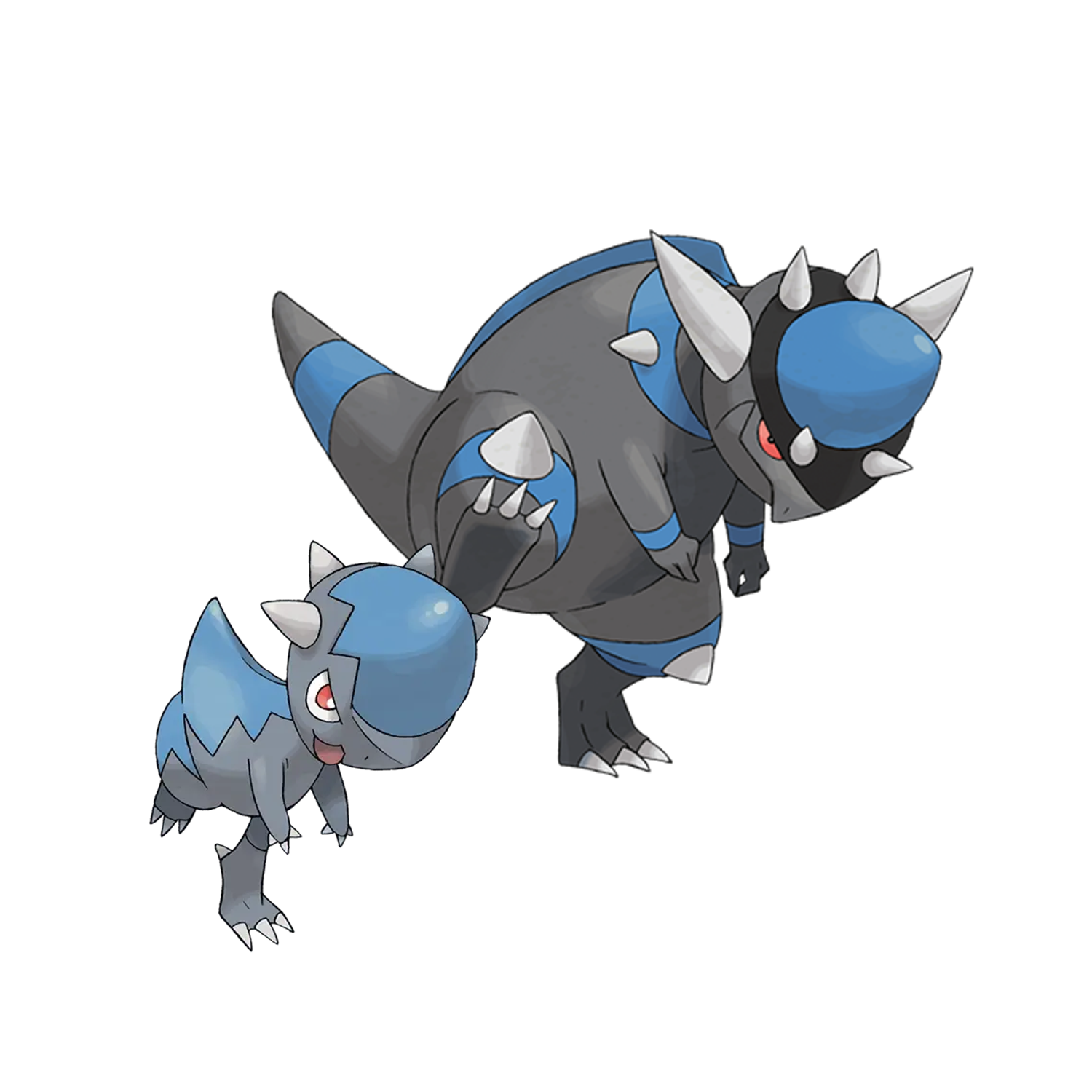
Cranidos is the Pokemon that the player receives upon restoring the Skull Fossil, and Rampardos is what Cranidos evolves into upon reaching level 30. These Pokemon were introduced in the Sinnoh region, and both share the mono-Rock typing. This line is based upon pachycephalosaurid dinosaurs. Multiple Pokedex entries mention this line living 100 million years ago, placing them in roughly the middle of the Cretaceous. These Pokemon lived in tropical rainforests and used their thick skulls as weapons. Though most Pokedex entries mention these Pokemon using them to knock down trees to feed on Berries, Pearl and Shining Pearl's entries for both and Y and Alpha Sapphire's entries for Rampardos mention them using their skulls to attack prey, so these Pokemon were likely omnivorous. Rampardos's skull is particularly thick, being noted to impede the development of its brain in multiple Pokedex entries, and Moon's entry for Rampardos mentions a revived one knocking down a skyscraper with it. This line likely went extinct during the K-T extinction event that wiped out the non-avian dinosaurs, though Ultra Moon's Pokedex entry for Rampardos mentions that some think they could have gone extinct before then because of Rampardos's underdeveloped brain.

SHIELDON AND BASTIODON

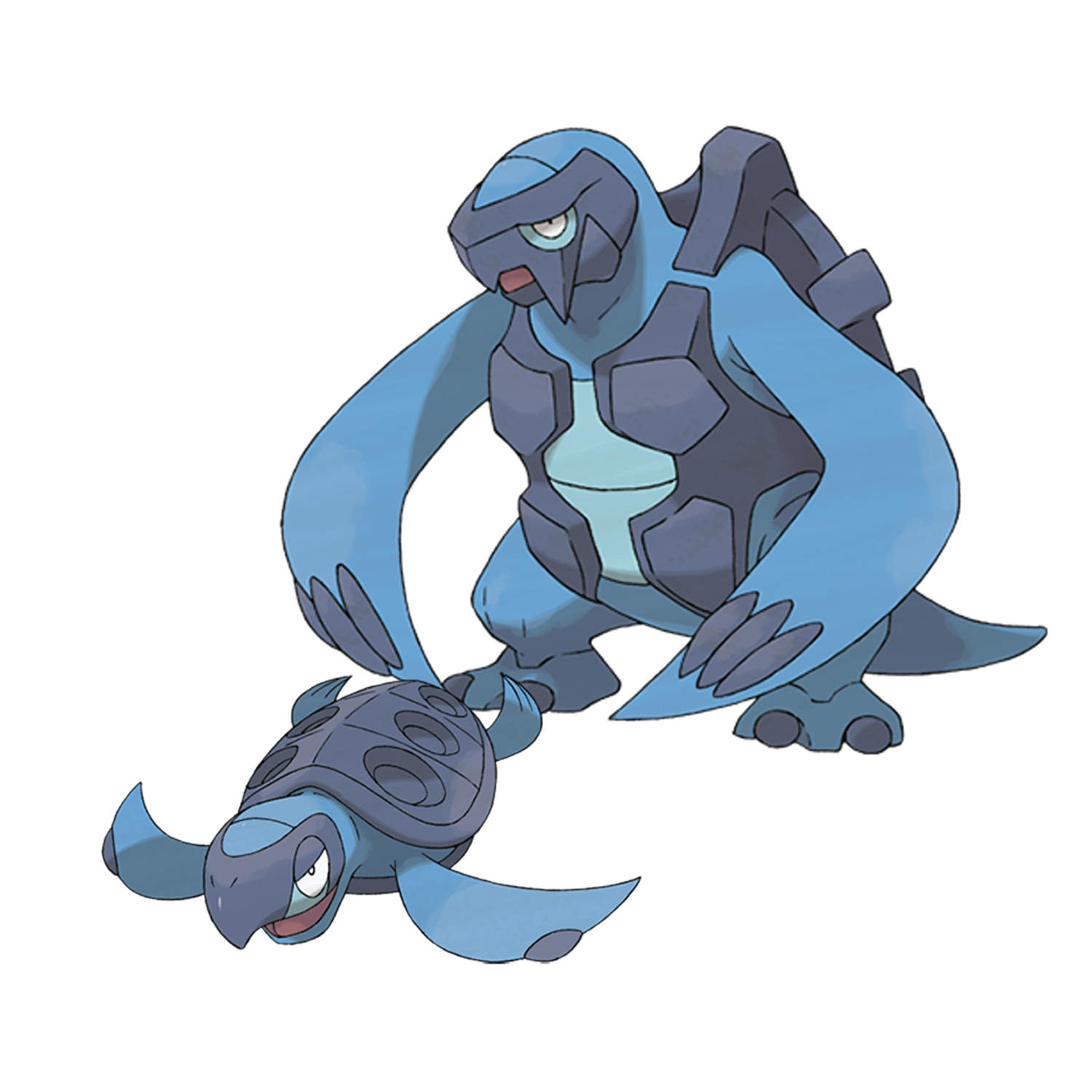
Shieldon is the Pokemon that the player receives upon restoring the Armor Fossil, and Bastiodon is what Shieldon evolves into upon reaching level 30. These Pokemon were introduced in the Sinnoh region, and both share the Rock-Steel typing. This line is based upon ceratopsid dinosaurs.